Tahir Bhat CNI
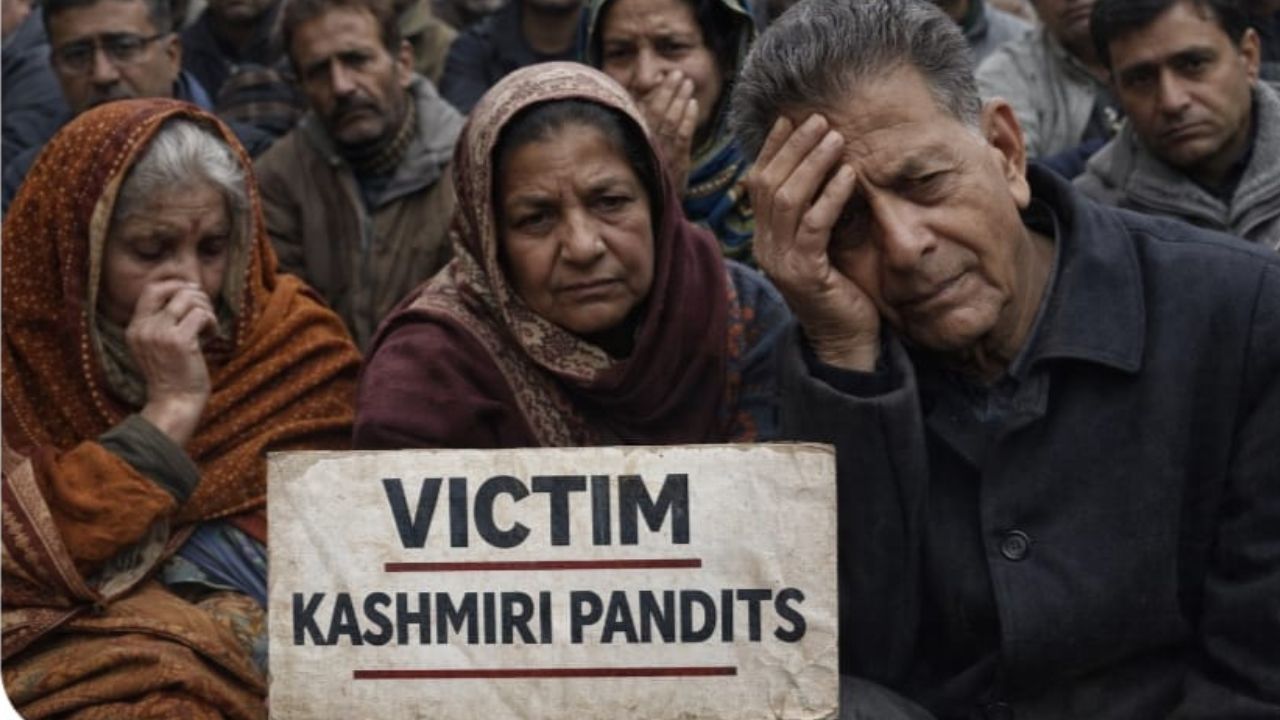
The recent address by Union Minister Dr. Jitendra Singh at a Kashmiri Pandit community function in Jammu, though wrapped in lofty rhetoric about composite culture, Kashmiriyat, and government sincerity, once again laid bare a painful and disturbing reality: the Indian State continues to speak about Kashmiri Pandits, but not to them and certainly not for them.
For a community that has endured one of the most brutal and systematic religious cleansings in independent India, the speech offered no reassurance. It was an emotional outburst devoid of policy, roadmap, or accountability. Not a single burning issue confronting displaced Kashmiri Pandits found mention. The absence of substance spoke far louder than the carefully chosen words delivered from the podium.
If the government genuinely believes that Kashmir’s so-called composite culture is incomplete without Kashmiri Pandits, then a fundamental question must be answered honestly: why has this “essential community” been forced to survive in exile for 36 long years without a clear, enforceable, and dignified plan for return, rehabilitation, and security? Composite culture cannot survive in speeches while its custodians rot in relief camps, cramped rented rooms, and urban slums—struggling daily with inadequate financial support, job insecurity, psychological trauma, and relentless social erosion.
The address reflected no pain, no urgency, and no ownership of responsibility. It was silent on the complete absence of a comprehensive resettlement policy. Silent on the failure of earlier rehabilitation packages. Silent on secure housing, credible security mechanisms, justice, prosecution, or even formal acknowledgment of the magnitude of crimes committed against Kashmiri Pandits. Silence maintained for decades ceases to be neutrality; it becomes complicity.
The reality is stark and undeniable. There is no roadmap for return. There is no policy vision for rehabilitation. There is no institutional framework addressing security, livelihood, cultural survival, or collective resettlement. The government appears content issuing statements while the community continues to sink into economic distress, social fragmentation, and generational hopelessness.
Equally disturbing is the repeated attempt to project “normalcy” in Jammu and Kashmir while the most affected indigenous community remains excluded from that narrative. Normalcy that does not include the dignified return of Kashmiri Pandits is selective and hollow. Peace that exists only in files and speeches,while victims remain displaced,is neither peace nor justice.
Despite repeated claims by the government and the ruling Bharatiya Janata Party that enough has been done, facts tell a very different story. Relief amounts remain grossly insufficient. Employment opportunities are limited, insecure, and unsafe. Younger generations are losing their language, culture, and civilizational roots. Elderly members continue to die in exile without ever seeing their homeland again. This is not rehabilitation; this is managed abandonment.
Most alarming is the widening disconnect between political leadership and the victim community. Even after eleven years under Prime Minister Narendra Modi, no serious, structured, outcome-oriented dialogue has taken place with genuine representatives of displaced Kashmiri Pandits on their core demands. Meetings, when held, remain symbolic. Announcements, when made, are cosmetic. Implementation, when promised, is endlessly deferred.
The yesterdays Jammu function of Kashmiri Pandits should have been an opportunity to acknowledge failure, accept responsibility, and announce corrective action. Instead, it became yet another platform for rehearsing generalities while sidelining real issues. This continued avoidance of hard truths has deepened the community’s sense of betrayal and isolation.
Let it be stated clearly that Kashmiri Pandits are not asking for sympathy. They are asking for justice. They are not seeking charity; they are seeking constitutional guarantees. They are not demanding favours; they are demanding restoration of rights violently snatched from them through terror and prolonged neglect.
If the government is sincere, it must place before the nation a White Paper detailing what has actually been done for displaced Kashmiri Pandits over the last 36 years and especially during the last eleven years. Let claims be tested against facts. Let assurances be measured against outcomes. Let accountability replace hollow narratives.
Until then, speeches no matter how eloquent will remain empty echoes for a community that has already lost its home, its security, and its trust.
History will not judge governments by the number of commemorative functions attended or speeches delivered, but by whether they restored dignity, security, justice, and homeland to one of India’s most brutally wronged indigenous communities. On that test, silence and inaction continue to speak volumes.
At this critical juncture, one truth must be accepted with courage and clarity: our future cannot remain hostage to political promises and shifting narratives. The Kashmiri Pandit community must rise on its own collective strength, unity, wisdom, and moral authority.
We must reduce our dependence on political parties and individual politicians who remember us only during functions, elections, or anniversaries.
Our faith must lie in our own unity, organized struggle, and uncompromising assertion of rights. Fragmentation has weakened us; unity alone will restore our voice.
The time has come to stand together, think collectively, act decisively, and speak in one resolute voice. Our history, sacrifices, and suffering demand nothing less.
[Sevak Kundan Kashmiri]
Kashmir Watcher & President
Kashmiri Pandit Conference( KPC)
Mobile No 8802257955
Email — kundankashmiri@