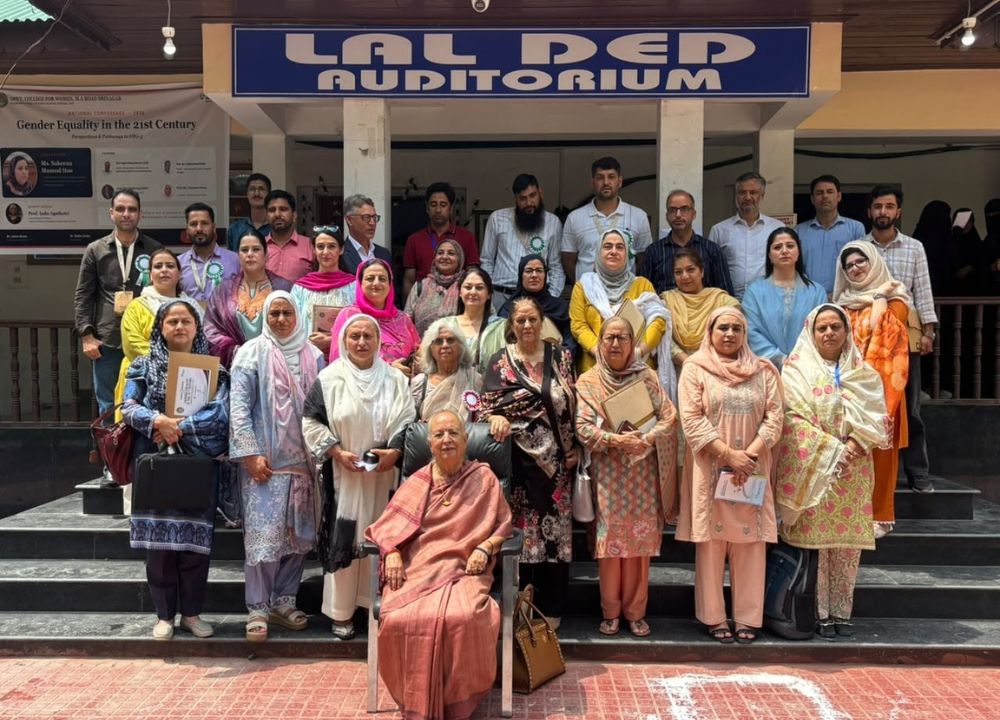
Experts deliberate on SDG-5, structural inequalities, unpaid work and women’s role in decision-making; Prof. Indu Agnihotri stresses gender sensitivity across all Sustainable Development Goals
Ishfaq gulzar cni
Srinagar, CNI NEWS A two-day National Conference on “Gender Equality in the 21st Century: Perspectives and Pathways to SDG-5” commenced on Tuesday at Government College for Women (GCW), M.A. Road, Srinagar, bringing together academicians, researchers and scholars to deliberate on contemporary challenges to gender equality and explore sustainable pathways towards achieving the UN’s Sustainable Development Goal-5.
As per news agency CNI NEWS, A two-day National Conference on “Gender Equality in the 21st Century, Perspectives and Pathways to SDG-5” commenced today at Government College for Women (GCW), M.A. Road, Srinagar, bringing together academicians, researchers and scholars to deliberate upon contemporary challenges and strategies towards achieving gender equality.
The inaugural session was attended by several prominent academicians and distinguished guests, including Prof. Indu Agnihotri, noted scholar and former Director, Centre for Women’s Development Studies, New Delhi; Mr. Sudhir Gupta, Executive Director, J&K Bank, which is sponsoring the conference; noted academicians Prof. Neerja Matoo, Prof. Naseem Shafaie and Prof. Masooda Yasin, besides principals of various colleges, senior faculty members, researchers, delegates and students.
Delivering the keynote address, Prof. Indu Agnihotri spoke on the larger dimensions of women’s development and gender equality, stressing the need for informed and sustained interventions to address structural inequalities.
Speaking on gender and the Sustainable Development Goals (SDGs), Prof. Agnihotri said, “Gender is not just one goal of the SDGs. You cannot achieve any of the SDGs without being sensitive to gender. Women have a stake in every aspect of their lives, and it is time we stood up and said that no committee and no aspect of our lives should be addressed without women having a say.”
Highlighting the issue of unpaid work, she said, “One of the fundamental questions before us is unpaid work. Women work in fields, on farms and in homes, yet much of this work remains invisible because women themselves are often not recognised as workers.”