CNI NEWS Debate in society about a film, web series, or entertainment content is nothing new. In a diverse country like India, it’s natural to have differing opinions on topics related to religion, culture, history, social values, and freedom of expression. But today, a major question
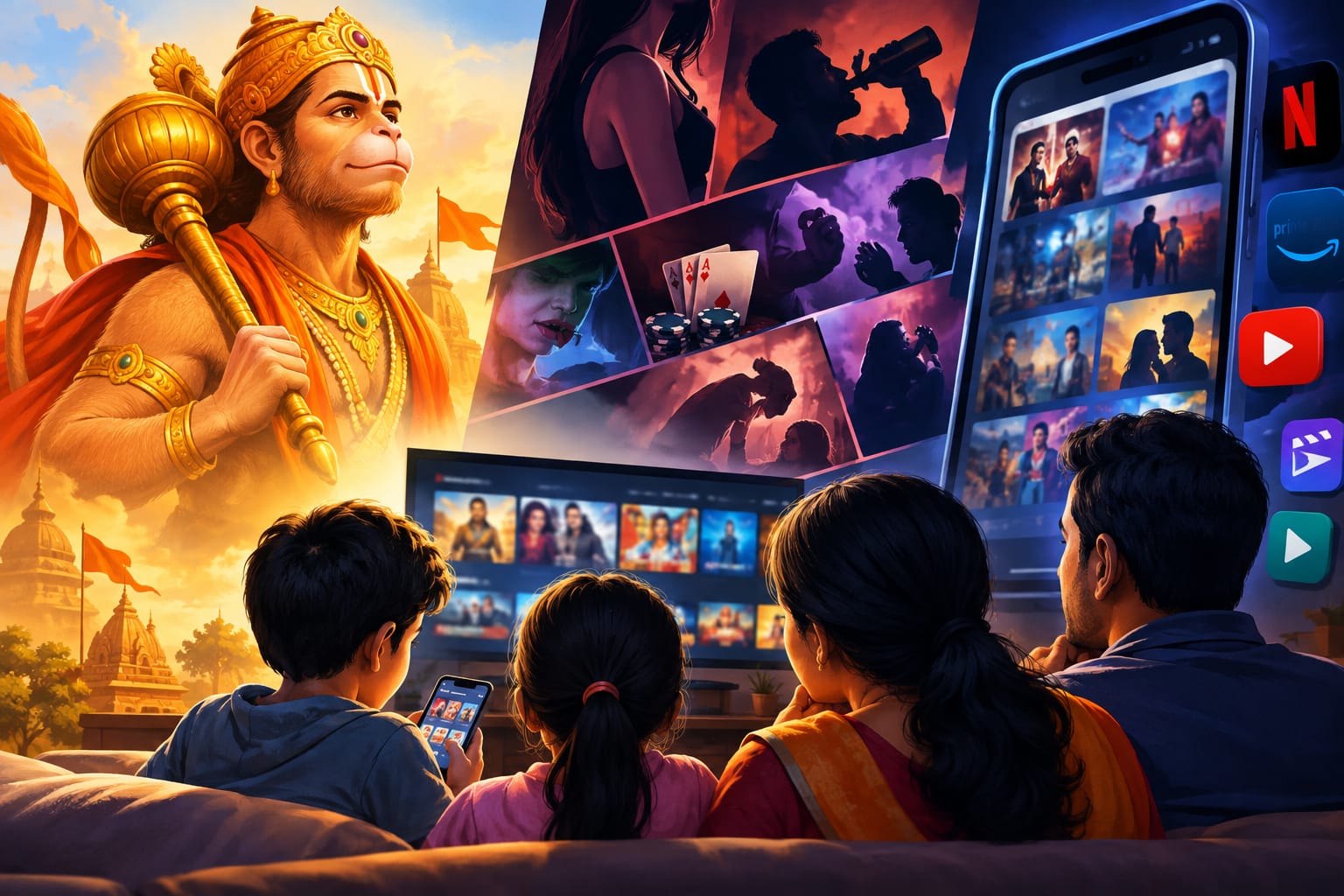
confronts us: are our objections based on the same criteria? The recent protests against the film “Hanuman Ansh” have made this question even more serious. If any group has objections to religious or cultural themes in a film, it should be debated democratically. But is this same sensitivity extended to films, songs, and digital content that portray obscenity, excessive violence, abusive language, drug abuse, crime, or objectionable behavior toward women?It is being said that films like “Hanuman Ansh” can increase Hindutva or religious influence in society.
This could be a comment from an individual or a political party, and opinions are likely to differ. But considering this argument in a broader social context, the question arises: if watching a film can influence society’s ideology, then why doesn’t content filled with obscenity, violence, crime, and abusive language have any impact on society? If films with religious themes can influence social thinking, then why shouldn’t there be serious discussion about the potential for the continued exposure to violent and obscene content to influence the language, behavior, and thinking of children and youth?There was a time when entertainment resources were limited. Movies would air on television on Sundays or other scheduled days, and families would watch them together. Today, the situation has completely changed. OTT platforms, social media, and mobile phones have put entertainment within our reach 24/7. Watching a movie no longer requires going to a movie theater or sitting in front of a television set for a specific time. A myriad of content from across the country and the world is available with just a click. This convenience has made entertainment easier, but it has also increased the responsibility of society and family more than ever before.The biggest concern is for children and adolescents. At the very age when children begin to understand language, behavior, relationships, discipline, and social norms, they are also constantly learning from the world of mobile phones and the internet. What they see, the language they hear, and the characters they idolize can influence their behavior. If entertainment repeatedly portrays abusive language as normal
conversation, makes violence entertaining, objects to women, or portrays crime with thrill and glamor, it’s natural to discuss its potential impact.However, it would be unfair to say that films or OTT content are solely responsible for a crime. Family, education, social environment, economic circumstances, personal experiences, and many other factors can influence a person’s behavior. However, the flip side is equally important: completely dismissing the potential impact of entertainment content is also unfair. At a time when concerns about children’s behavior, language, and digital habits are growing in society, there should be an open and factual debate on the social responsibility of films and digital platforms.Today, the level of violence in films and web series appears to have increased significantly. Crime-centric stories, murder, violence, revenge, abusive language, and
obscene scenes often become part of entertainment. The problem isn’t just that such content exists, but also what age group can easily view it. If children have mobile phones in their hands and can easily access age-appropriate content, simply telling parents not to let them watch it isn’t enough. In the digital age, platforms, parents, teachers, and viewers themselves have a shared responsibility.The question of freedom of expression is also important here. In a democracy, diversity of views on creative expression is natural. Demanding a ban on every film that someone dislikes is not the solution. Similarly, ignoring all objectionable content by claiming it is merely entertainment is not appropriate. What is needed is a system that provides safe and responsible choices to audiences through laws, age-based classifications, parental controls, and digital literacy.The question also arises as to what the priorities of social protest should be.
If people raise their voices against a film that offends religious sentiments, they have a democratic right to do so. But society must also consider whether we are taking the same seriousness of obscene songs, objectionable scenes, excessive violence, and inappropriate content accessible to children. Protests should be based not on individuals, parties, religions, or political conveniences, but on common social standards.Today, it’s also important to understand that audiences aren’t just passive consumers. The market generates more content in the same vein as the content that audiences repeatedly watch, share, and popularize. Therefore, society’s responsibility isn’t limited to filmmakers or the government. Parents must communicate with children, explaining that not everything they see on screen represents a model for real life. Schools should discuss digital and media literacy, and OTT platforms should implement age-based controls and parental features.Protecting culture won’t be achieved by simply protesting a single film. If the concern is truly about the thinking, language, behavior, and social values of the next generation, the scope of the debate must be equally broad.
Films with religious themes should be discussed based on facts and law, but the impact of content containing obscenity, violence, drugs, crime, and abusive language should also be questioned with equal seriousness. Targeting one type of content while ignoring others is not a permanent solution to the problem.Today, when everyone from children to youth, women, men, and adults are connected to the world of digital entertainment, we must decide how to strike a balance between freedom of entertainment and social responsibility. The question isn’t just about the film “Hanuman Ansh.” It’s about the entire visual world that our next generation sees, hears, and, to some extent, incorporates into their behavior. Therefore, the need isn’t for selective protests, but for a serious social debate on equal standards, responsible entertainment, and a healthy digital culture. Ultimately, the question isn’t which film promotes which idea; it’s about what kind of visual culture we’re leaving behind for our children and society.(Dr. Satyawan Saurabh, PhD (Political Science), is a poet and social thinker.)— Dr. Satyavan Saurabh,Poet, social thinker and columnist, All India Radio and TV panelist,333, Fairy Garden, Kaushalya Bhawan, Barwa (Siwani) Bhiwani,Haryana – 127045, Mobile :9466526148,01255281381Bank Account
Information1775101002583, SATYWAN VERMAIFSC CODE- CNRB0001775Note- My creation/article/poem/story/article sent to you for publication is completely original and unpublished.—-You received this message because you are subscribed to the Google Groups “english Articles” group.To unsubscribe from this group and stop receiving emails from it, send an email to english-articles333+unsubscribe@googlegroups.com.To view this discussion, visit https://groups.google.com/d/msgid/english-articles333/CAMcXN-_fiKgRyQveL6aW-d1rE-7oWdrDmoLLVUai2RpooFTWEQ%40mail.gmail.com.For more options, visit https://groups.google.com/d/optout.